
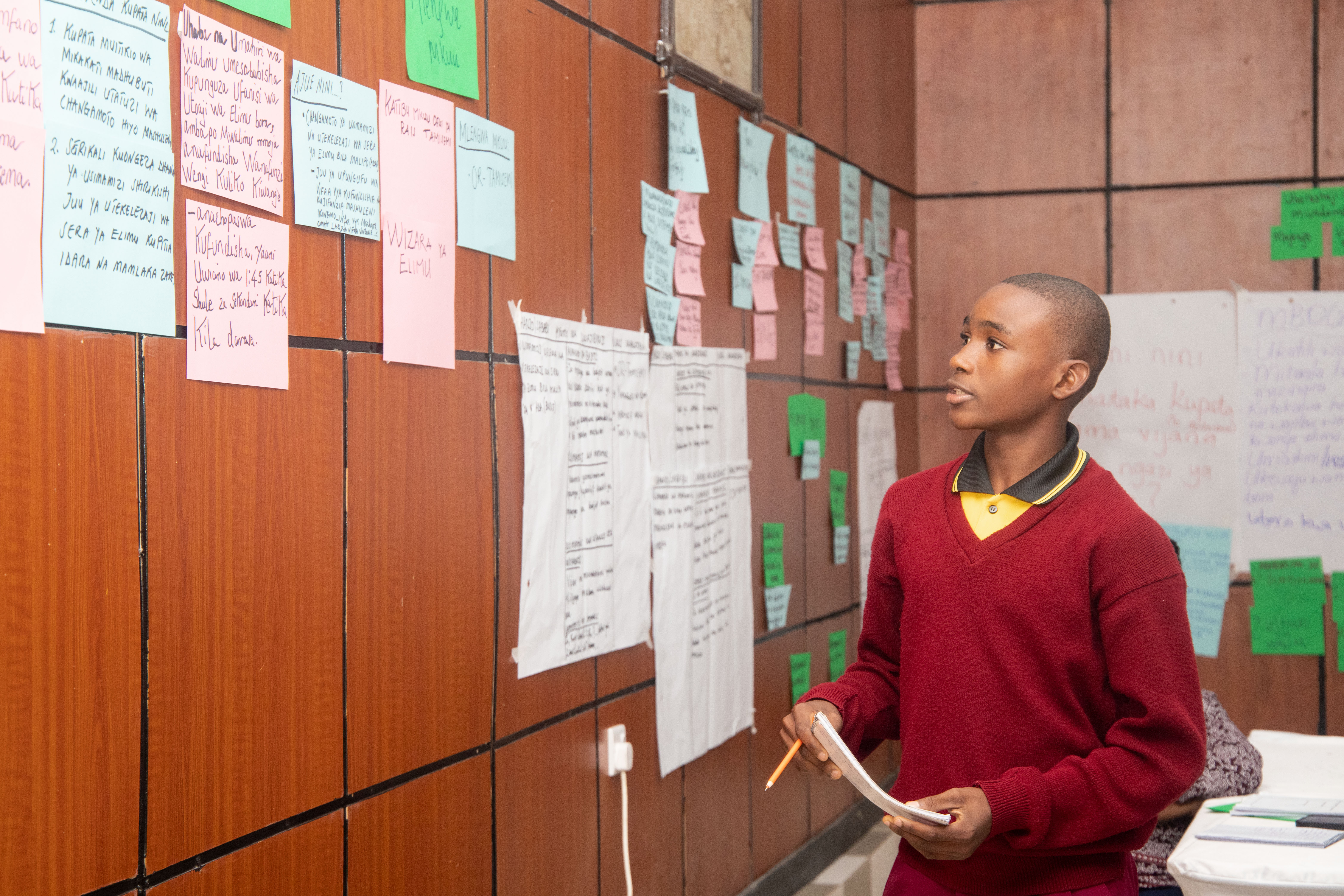
A Policy Forum analysis reveals that while Tanzania has strengthened financing for basic education, persistent gaps in secondary school transition, learning outcomes and support for vulnerable learners threaten progress towards the Sustainable Development Goal on quality education.
Tanzania has made notable progress in expanding access to basic education, but weaknesses in learning outcomes, school retention and targeted support for disadvantaged learners continue to undermine the country's ambition of achieving inclusive and equitable quality education.
This is according to a Policy Forum analysis titled Tanzania’s Progress on Sustainable Development Goal Four (SDG 4), which examines education financing, government expenditure and education-sector performance between the 2019/20 and 2023/24 financial years.
The analysis, prepared as a contribution to Tanzania's 2026 Voluntary National Review (VNR), finds that although the government has established a relatively strong financing foundation for public education, the implementation of programmes intended to improve learning, equity and inclusion remains inadequate.
The report shows that approximately TSh 20.27 trillion was approved for selected basic-education-related expenditure over the five-year period, of which TSh 18.51 trillion was actually spent, representing an overall budget execution rate of 91.3 per cent.
However, the analysis points to a significant difference between financing the day-to-day operations of the education system and implementing targeted interventions necessary to improve the quality of education.
Recurrent expenditure, which includes salaries, transfers to local government authorities and routine operations, accounted for 77.7 per cent of actual spending and recorded an execution rate of 96.6 per cent.
In contrast, development expenditure, which finances infrastructure, education reforms, teacher support and inclusion programmes, recorded a lower execution rate of 76.8 per cent.
The report further establishes that domestic financing accounted for 95 per cent of actual education expenditure, while externally financed programmes recorded an execution rate of only 39.4 per cent.
According to the analysis, this weak implementation of development programmes affects critical interventions intended to improve secondary education quality, learning outcomes, teacher support and access for vulnerable learners.
Transition to secondary education remains a major challenge
Despite improvements in primary school completion, the transition from primary to secondary education remains one of the country's most significant education-sector challenges.
The analysis indicates that Standard VII completion increased to 89.9 per cent in 2024, demonstrating considerable progress in keeping children within the primary education system.
However, the transition rate from Standard VII to Form I stood at 77.9 per cent, remaining substantially below the 95.9 per cent target set for 2025/26.
Completion at Form IV also improved only modestly, reaching 41.4 per cent in 2024.
The findings suggest that while more children are completing primary education, a significant challenge remains in ensuring that they proceed to secondary education and complete the lower-secondary cycle.
The report argues that improving transition requires more than general allocations to secondary education. It calls for identifying councils and communities experiencing low transition rates and addressing specific barriers, including school capacity, distance to schools, household costs, adolescent vulnerability and school safety.
Learning outcomes remain uneven
The report also raises concerns about the quality of education, particularly learners' ability to acquire essential reading and mathematics competencies.
Although some indicators show improvement, the performance of primary education remains concerning.
The Primary School Leaving Examination (PSLE) pass rate declined from its 2020 baseline of 82.24 per cent to 80.6 per cent in 2023, falling below the baseline.
In contrast, the Certificate of Secondary Education Examination (CSEE) pass rate improved to 89.37 per cent in 2023.
The analysis also identifies persistent shortages of learning materials. Both primary and secondary schools had approximately two pupils sharing one mathematics textbook, against the recommended benchmark of one textbook per pupil.
Furthermore, the secondary school pupil-teacher ratio worsened from 23:1 in 2020 to 26:1 in 2024, indicating increasing pressure on teachers at this level.
The report attributes some of these weaknesses to the inconsistent implementation of programmes specifically designed to improve learning, including the Secondary Education Quality Improvement Project (SEQUIP), Education Programme for Results (EP4R) and other teacher and learning support initiatives.
It emphasises that maintaining school operations is not sufficient to guarantee quality education unless investments translate into improved teaching, adequate learning materials and better learning outcomes.
Targeted support for vulnerable learners remains inadequate
On equity and inclusion, the analysis finds that Tanzania has made progress in providing broad access to education, particularly through fee-free primary and secondary education.
Primary gender parity is broadly strong, while participation in lower-secondary education increasingly favours girls.
Nevertheless, the report cautions that these achievements do not necessarily mean that all disadvantaged groups have equal opportunities to access and complete education.
It identifies weaknesses in targeted financing for learners with disabilities, children from vulnerable households, adolescent learners and other groups facing barriers to education.
Budget allocations for programmes supporting marginalised students, adolescent education, school water, sanitation and hygiene (WASH), and disability-related inclusion were generally small, fragmented or poorly executed.
School retention is another concern, with secondary school dropout remaining above the baseline. Truancy was identified as the dominant recorded reason for dropout.
Although pregnancy-related dropout declined considerably as a share of female secondary school dropouts, the report notes that fee-free education alone cannot address all the factors affecting school attendance and retention.
It highlights the need for stronger learner support, improved school safety, household engagement and follow-up mechanisms involving schools and communities.
The report therefore calls for more targeted interventions that identify learners at risk of exclusion and ensure that education financing responds to their specific needs.
Education for citizenship and life skills requires stronger implementation
The analysis further assesses Tanzania's progress towards integrating sustainable development, citizenship, human rights, gender equality, environmental protection and life skills into education, as required under SDG 4.7.
It acknowledges that the country's education policies and curricula provide a relatively strong foundation for these commitments.
However, translating policy commitments into classroom practice remains a challenge.
For instance, the proportion of primary schools reporting the provision of life-skills education increased from 82.2 per cent to 92.1 per cent. Yet, schools with trained teachers delivering life-skills education increased from only 42.7 per cent to 54.4 per cent.
At secondary level, life-skills provision remained relatively high, but trained-teacher coverage stood at 54.9 per cent in the latest reported period.
The report also identifies weaknesses in the availability of Civics and General Studies textbooks, as well as gaps in assessing and monitoring competencies related to sustainable development and global citizenship.
It argues that the presence of relevant themes in education policies and curricula should not be mistaken for full implementation, emphasising the importance of teacher preparation, learning materials and effective assessment systems.
Strengthening accountability in education financing
Overall, the analysis concludes that Tanzania has established a credible domestic financing base for maintaining the public education system, but the country needs to strengthen the implementation of targeted reforms if it is to accelerate progress towards SDG 4.
Among its recommendations, the report calls for making the transition from primary to secondary education a specific delivery priority, supported by interventions targeting councils and communities with low transition rates.
It also recommends shifting education reform budgeting from approved allocations towards execution-tested delivery, ensuring that funds allocated to priority programmes translate into actual implementation and measurable improvements.
Other proposed measures include strengthening targeted financing for vulnerable learners, improving school retention, investing in teacher preparation and learning materials, and strengthening monitoring of education outcomes.
The analysis further highlights the importance of improving transparency and availability of education financing information, particularly data on the disbursement of funds, to enable better tracking of whether allocated resources reach intended programmes and beneficiaries.
The report's central message is that the next stage of Tanzania's education-sector progress will depend not only on how much the government allocates to education, but also on how effectively those resources address the persistent gaps in learning, transition, equity and inclusion.