
Meaningful citizen participation in local governance goes beyond attending meetings or being invited to express opinions. It requires citizens to have access to relevant information, opportunities to raise issues affecting their communities, and mechanisms through which their concerns are considered, addressed and followed up by those responsible for public service delivery.
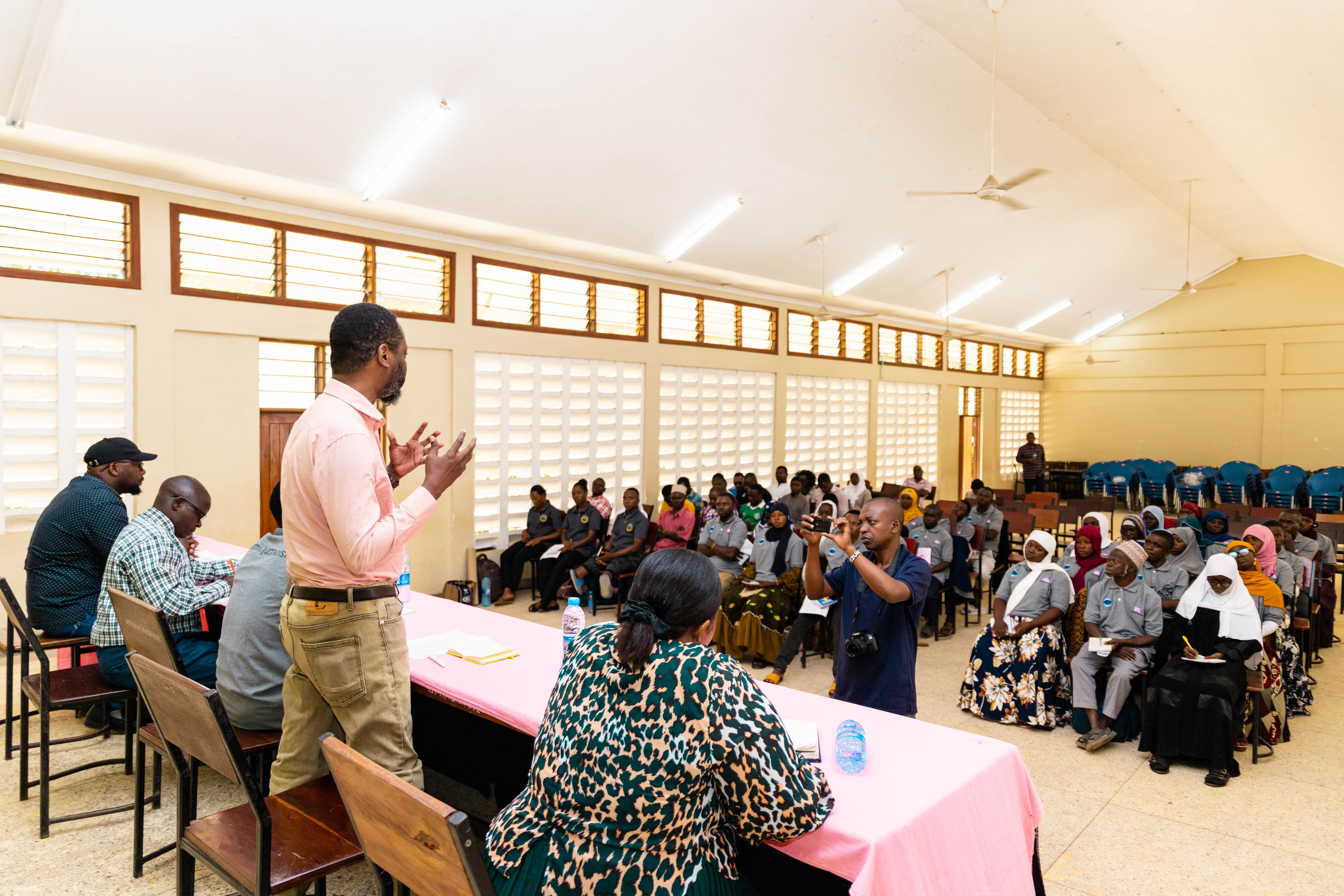
Recognising this, Policy Forum Tanzania, in partnership with LANGO and MTWANGONET, facilitated a series of ward- and district-level dialogues in Newala and Mtama District Councils from 20 to 24 October 2026 under the Jamii Jumuishi project, funded by the Embassy of Finland in Tanzania. The dialogues sought to strengthen constructive engagement between citizens and duty bearers in local planning, budgeting, decision-making and public resource accountability.
Although local government structures provide opportunities for citizens to participate in development planning and decision-making, meaningful participation remains a challenge in many communities. Citizens often lack adequate information to engage effectively, while existing mechanisms do not always systematically capture community priorities, provide feedback or ensure that commitments made by authorities are followed through.
The dialogues therefore provided a structured platform for citizens, represented by Community Accountability Champions (CACs), also known as Vinara wa Demokrasia na Maendeleo, to present evidence-based concerns and priorities directly to local government leaders and technical officers. They also offered an opportunity for citizens and government representatives to clarify their respective roles and responsibilities in addressing community needs.
Taking Community Priorities to Decision-Makers
The engagement brought together 248 participants, comprising 121 women and 127 men, across four dialogues. Participants included CACs, community representatives, village and ward leaders, councillors, council technical officers, representatives of village committees, project partners and local media.
In Newala, the ward-level dialogue was held on 20 October 2026 at Kitangali Teachers’ College, followed by a district-level engagement on 21 October at Newala District Council Hall. In Mtama, ward- and district-level dialogues took place on 23 and 24 October, respectively. Radio Newala also participated in the Newala engagements to help communicate key messages and discussions beyond the meeting venues.
At ward level, CACs presented village action plans, shared implementation progress and highlighted service-delivery challenges requiring attention. The discussions created an opportunity for community members to move beyond general expressions of concern and present specific experiences and evidence that could inform local government decisions.
In Newala, representatives from Mitema, Idamnole, Mandala and Chihangu villages raised concerns relating to access to healthcare, water tariffs and reliability, electricity connections, road infrastructure, availability of medicines, staffing in health facilities, teacher shortages and inadequate school infrastructure.
For residents of Mitema, access to healthcare remains a significant challenge, with community members reporting that they travel more than 10 kilometres to reach health services in Kitangali (town). In Idamnole, participants highlighted the high cost of water, limited electricity connections and inadequate staffing at the local dispensary.
Education infrastructure and staffing also featured prominently. In Mandala, residents reported having approximately 350 pupils served by only four teachers, alongside limited teachers' housing, with only one teacher's house available. In Chihangu, participants raised concerns about water and electricity access, school infrastructure, parental involvement in education and delays in convening Village Assemblies.
These discussions demonstrated how community-level engagement can bring specific service-delivery gaps to the attention of authorities and help identify priorities requiring intervention.
In Mtama, the ward dialogue focused on reviewing progress in implementing village action plans in Kilimahewa A, Kilimahewa B, Nyengedi B and Nyengedi. Participants shared examples of community initiatives, including a school farm and teachers' house in Nyengedi B, a village market in Nyengedi, a village office in Kilimahewa B and the construction of 17 toilet holes at Mtua Secondary School.
The discussions also emphasised the importance of ensuring that citizens participate in identifying development priorities before village and ward plans and budgets are finalised. Participants were encouraged to use the October/November village budgeting period to identify, prioritise and submit their development needs for consideration.
Turning Community Concerns into Institutional Responses
A key feature of the dialogues was the opportunity for CACs and community representatives to take issues raised at ward level directly to district leadership and technical officers.
During the Newala district dialogue, community representatives presented their concerns to council leaders, creating space for government officials to clarify ongoing interventions, respond to questions and identify possible measures through responsible departments and local planning processes.
Several responses and commitments emerged from the discussions.
On water affordability, the District Council Chairperson reported that an agreement in principle had been reached with the water authority to reduce the water tariff from TZS 5,000 to TZS 2,500 per unit, with December 2027 indicated as the expected implementation period.
Regarding healthcare staffing, the Chairperson directed the responsible human resources office to arrange for an additional health worker at Idamnole Dispensary within one month. A councillor also undertook to follow up on the electricity connection issue affecting the facility.
On education, council leadership reported that measures addressing teacher shortages in Chihangu and Kitangali had been incorporated into the FY 2026/2027 planning process, while infrastructure needs raised by communities would be assessed.
The discussions also reinforced the importance of functioning local governance structures. Following concerns about the frequency of Village Assemblies, participants resolved to convene the Chihangu Village Assembly on 30 October 2026 to discuss community development priorities.
These commitments demonstrated the value of creating spaces where citizens can directly engage decision-makers, obtain explanations and identify issues requiring further institutional action.
Communities Are Also Taking the Initiative
Beyond seeking government intervention, the dialogues highlighted the important role communities themselves play in mobilising resources and contributing to local development.
In Chihangu, residents shared their efforts to establish a satellite school through community contributions and site preparation. They also described initiatives to dig trenches for water pipes to facilitate the extension of water services to households.
Similarly, residents of Mitema reported mobilising approximately TZS 4.2 million, representing 60 per cent of their TZS 7 million fundraising target for the construction of a dispensary. The fundraising initiative was expected to continue through December 2026.
These examples illustrated how meaningful citizen participation can strengthen local ownership of development initiatives while encouraging communities to work collectively towards addressing service-delivery challenges.
In Mtama, the discussions provided an opportunity to review progress in implementing village action plans and receive guidance from local government representatives on implementation arrangements and the involvement of relevant technical experts.
The district-level engagement further emphasised the importance of connecting priorities identified by communities with district development plans and budgets, improving communication between citizens and authorities, and strengthening accountability for the allocation and use of public resources.
Strengthening the Role of Community Accountability Champions
An important outcome of the dialogues was the strengthened understanding of the role of CACs in promoting citizen participation and accountability at the community level.
Through their engagement, CACs demonstrated how they can mobilise residents, facilitate information-sharing, document community priorities and concerns, and represent these issues in discussions with local government authorities.
Their role is particularly important in ensuring that the voices of women, young people and persons with disabilities are considered in development planning and decision-making.
The Newala dialogues recorded 10 persons with disabilities among participants across the two engagements, highlighting the importance of continued efforts to improve the inclusion and representation of persons with disabilities in such processes.
The discussions also reinforced that CACs should not operate in isolation but work collaboratively with village and ward leaders, councillors, village committees and other community structures to ensure that identified priorities receive attention through established governance mechanisms.
From Dialogue to Sustained Accountability
While the dialogues provided an important opportunity for engagement, their ultimate value will depend on whether the issues raised and commitments made translate into tangible improvements in communities.
One key lesson emerging from the engagements is that direct dialogue between citizens and duty bearers can help translate community concerns into specific institutional responses. However, such engagement must be supported by clear responsibilities, realistic timelines and regular feedback to enable citizens to monitor progress.
For Mtama, an important next step is to ensure that priorities identified by CACs and communities are reflected in draft Village Development Plans for FY 2027/2028 and subsequently considered in ward-level plans and council budgets. Village implementation plans should also reflect actual community priorities, while village governments strengthen sustainable local revenue generation and improve revenue management to support development initiatives.
In both districts, village and ward authorities are encouraged to convene regular Village Assemblies, share information on available public resources and provide feedback on how community priorities are being addressed. CACs and local leaders will also need to continue mobilising women, youth and persons with disabilities to participate in planning, budgeting and accountability processes.
Ultimately, the Newala and Mtama dialogues demonstrated that meaningful citizen participation requires more than providing communities with an opportunity to speak. It requires a responsive governance process in which citizens are informed, their priorities are heard and considered, authorities explain their decisions, and agreed actions are followed up.